Buy-to-let flat in Prague: yield, financing and what to check before you buy
 Written and reviewed by Bc. Petr Kučera, MSc., MBA

Public market averages put the annual gross rental yield of a Prague flat at roughly 3 to 3.7%. The exact figure depends on which price you divide by. The rents behind these figures are asking rents, and the calculations exclude all costs. According to the ČBA Hypomonitor of the Czech Banking Association (ČBA), the average agreed rate on new mortgages, excluding refinancing, was 5.00% in August 2026. How an investment turns out depends on the specific flat and on any rise in its value, and that rise is not guaranteed. All figures reflect the situation on 29 September 2026. This article is an informational overview, and we recommend basing your decision on a calculation for the specific flat. We aim to show what is documented, where the figures come from and how to calculate the yield yourself.
Realistic expectations for a Prague buy-to-let
Buying a flat ties up millions of Czech crowns in one property. Gross yields are around 3 to 3.7%. If you finance the flat with a mortgage, you pay interest of around 5%. An attractive overall return depends on future appreciation, which is uncertain. The sources reviewed contained no direct comparison between Prague flats and funds covering the same period, so we provide no such comparison here. We describe how a Prague buy-to-let differs from other investments only in terms of its structure: a low ongoing yield, substantial initial capital and reliance on appreciation.
Possible benefits and related risks
A flat may provide regular rental income, long-term appreciation, direct control over the asset and access to borrowing as leverage. Prague has seen substantial historical appreciation, with figures set out below. Each benefit depends on circumstances; none is assured.
The main risks:
- Low ongoing yield relative to mortgage rates.
- Wealth concentrated in one asset and location.
- Vacant periods and tenant selection.
- Repairs payable by the landlord under Section 2257 of the Civil Code (Act No. 89/2012 Coll.).
- Decisions made by the owners’ association (SVJ).
- Proposed short-term accommodation regulation: Ministry for Regional Development (MMR) and eTurista.
- Low liquidity and potential tax on a sale before 10 years, subject to exemptions under Section 4 of the Income Tax Act.
- Developer risk when buying before completion.
- Interest rate changes when the fixed-rate period ends.
Why plan to hold for more than 10 years
For a purchase made today, the holding period test for income tax exemption requires ownership for more than 10 years under Section 4(1)(b) of the Income Tax Act, as at 29 September 2026. With a shorter holding period, the sale is tax-free only if another statutory exemption applies. We explain these further in the tax section.
Gross rental yield in Prague according to published data
Gross yield is calculated as follows:
Gross yield (%) = monthly rent per m² × 12 / price per m² × 100, with rent and price both in CZK.
Public averages give an indicative gross yield range of 3 to 3.7%. For the lower bound, we take a rent of CZK 462/m² and the asking price of new-build flats of CZK 182,700/m²: 462 × 12 / 182,700 = 3.03%. For the upper bound, we take a rent of CZK 459/m² and an achieved sale price of CZK 149,500/m²: 459 × 12 / 149,500 = 3.68%. The figures come from Deloitte. The rent data are from the Rent Index for Q2 2026, except that the upper bound uses the rent from the Q4 2025 edition. The prices are from the Real Index and the Develop Index. All rents are asking rents, and costs are not included.
The price you divide by has a marked effect on the result:
| Monthly rent (CZK/m²) | Price (CZK/m²) | Gross yield |
|---|---|---|
| 462, Prague, Deloitte Rent Index, Q2 2026 | 153,100, achieved sale prices in Prague, Deloitte Real Index, H1 2026 | 3.62% |
| 459, Prague, Deloitte Rent Index, Q4 2025 | 149,500, achieved sale prices in Prague, Deloitte Real Index, H2 2025 edition | 3.68% |
| 465, median asking rent, NEMO.HERO, 28 July 2026 | 163,621, median asking price, NEMO.HERO, 28 July 2026 | 3.41% |
| 462, Prague, Deloitte Rent Index, Q2 2026 | 182,700, asking prices of available new-build flats, Deloitte Develop Index, Q2 2026 | 3.03% |
| 498, development projects, Deloitte Rent Index, Q2 2026 | 182,700, asking prices of available new-build flats, Deloitte Develop Index, Q2 2026 | 3.27% |
| 490, Prague 1, Deloitte Rent Index, Q2 2026 | 216,700, achieved sale prices in Prague 1, Deloitte Real Index, H1 2026 | 2.71% |
| 482, Prague 2, Deloitte Rent Index, Q2 2026 | 199,900, achieved sale prices in Prague 2, Deloitte Real Index, H1 2026 | 2.89% |
| 443, Prague 4, Deloitte Rent Index, Q2 2026 | 144,400, achieved sale prices in Prague 4, Deloitte Real Index, H1 2026 | 3.68% |
Every row uses aggregate figures, including the stated medians, without matching rents and prices to identical flats. Rents are asking figures and costs are excluded. The yields are our calculations from published data.
Here the price serves only as the denominator in the yield calculation. Our home page explains how we arrive at the price of a specific flat.
Advertised rent versus rent actually paid
Deloitte’s Q2 2026 Rent Index puts Prague’s average monthly asking rent at CZK 462/m², down 0.9% quarter on quarter. It uses completed portal listings, with amounts including VAT, rather than rents agreed in signed leases. Deloitte describes its method as follows: ‘It collects data from property portals.’ These figures appeared in the release published on 17 August 2026.
The official rent price map of the Ministry of Finance is also based on portal data. Its methodology, updated on 17 April 2026, defines a completed listing as ‘the price stated at the moment the advertisement is withdrawn from the market’. The map does not record signed leases. As a result, the Czech Republic has no public source of rents actually agreed. The figure of CZK 462/m² is therefore only a guide, and it is uncertain whether a specific flat would achieve it. See the Ministry of Finance methodology.
Deloitte’s Real Index uses achieved sale prices: ‘It collects data only from completed flat sales recorded in the Land Register (Cadastre of Real Estate) in the form of purchase agreements.’ By contrast, NEMO.HERO reported Prague median asking prices of CZK 163,621/m² and median monthly asking rents of CZK 465/m² on 28 July 2026. These imply a gross yield of approximately 3.4%. Its own warning reads: ‘These are asking prices, not achieved prices’. Both inputs come from a single snapshot of active listings.
Why yields are lower in the centre
Deloitte’s Q2 2026 data show relatively small differences in asking rents between Prague districts (CZK/m² per month):
| District | Asking rent, CZK/m² per month |
|---|---|
| Prague 1 | 490 |
| Prague 2 | 482 |
| Prague 3 | 480 |
| Prague 4 | 443 |
| Prague 5 | 461 |
| Prague 6 | 454 |
| Prague 7 | 493 |
| Prague 8 | 465 |
| Prague 9 | 468 |
| Prague 10 | 442 |
These are averages for the districts Prague 1 to Prague 10, with no breakdown by street or housing estate. Prague 7 has the highest figure at CZK 493/m² and Prague 10 the lowest at CZK 442/m². The gap is roughly 11.5% (493 / 442 = 1.115).
Achieved sale prices differ more than rents. The Deloitte Real Index for H1 2026, published in September 2026, puts the Prague average at CZK 153,100/m², a change of +2.4%. Prague 1 is the most expensive at CZK 216,700/m² and Prague 4 the cheapest at CZK 144,400/m². Prices grew fastest in Prague 2, by +9% to CZK 199,900/m². The previous edition, for H2 2025, gave a Prague figure of CZK 149,500/m² and a change of +4.0%.
Prague 1’s price is approximately 50% above Prague 4’s: 216,700 / 144,400 = 1.50. The rent gap is much smaller. A higher price in the denominator, with similar rent, reduces the percentage yield, giving 2.71% for Prague 1 and 3.68% for Prague 4. This is a logical interpretation of the data.
New build versus an older flat
Deloitte’s Q2 2026 data for Prague break asking rents down by building type:
- Development projects: CZK 498/m² per month, 19.5% of listings.
- Brick buildings: CZK 459/m² per month, 65.4% of listings.
- Prefabricated panel buildings: CZK 427/m² per month, 15.1% of listings.
Asking rents per m² in new builds are roughly 8.5% higher than in brick buildings (498 / 459 = 1.085). New builds also cost more to buy. The Deloitte Develop Index for Q2 2026, published in July 2026, puts the average asking price of available units in Prague development projects at CZK 182,700/m², a change of +1.3%. Prague 2 is the highest at CZK 265,100/m² and Prague 10 the lowest at CZK 166,800/m². These figures come from developers’ price lists. They do not show achieved prices and do not capture discounts.
That new-build price exceeds Prague’s achieved average of CZK 153,100/m². Using the averages produces a new-build gross yield of 3.27%. Your result depends on the actual purchase price relative to rent. These data do not establish that new builds deliver higher yields.
Rent trends and consistent sources
Deloitte’s asking rents for Prague over the last three quarters tracked:
- Q4 2025: CZK 459/m² per month, +0.7% on the previous quarter (press release of 26 January 2026).
- Q1 2026: CZK 466/m² per month, +1.5% on the previous quarter (press release of 5 May 2026).
- Q2 2026: CZK 462/m² per month, down 0.9% on the previous quarter (press release of 17 August 2026).
According to Deloitte’s publication, the often quoted 216.6% figure covers the regional capitals of the Czech Republic in Q2 2026, with the whole of 2014 set at 100%. It is not a Prague-only figure. The publication provides no separate Prague series using a 2014 base.
Do not switch sources within a single yield calculation. Here is an example of a calculation that mixes methods. Take Deloitte’s 2026 rent of CZK 462/m² and divide it by the 2025 average price of CZK 131,520/m² from the Czech Statistical Office (ČSÚ): 462 × 12 / 131,520 × 100 = 4.22%. This combines different periods and different methods, so we do not present 4.22% as a valid yield.
Calculating your own net rental yield
Three measures that are often confused
- Gross yield: annual rent / purchase price × 100. This definition is supported by Hyponamiru and Banky.cz.
- Net yield: annual rent actually collected, less the owner’s costs, divided by the purchase price, following Banky.cz. Our stricter methodological option includes incidental acquisition costs in the denominator.
- Return on equity: (cash flow after financing + change in the flat’s value minus transaction costs) / equity invested. We use this working definition specifically for this article.
Repaying principal reduces debt; it is not a cost. Interest is a cost, while the entire instalment is a cash outflow, as explained by Podnikatel.cz. Price appreciation produces no cash before a sale.
The tenant makes advance payments for water, heating, the lift, cleaning and waste alongside the rent. In law these advances are kept separate from the rent, and the landlord must settle them once per billing period. The rules are in Section 2251(1) of the Civil Code and Section 7 of Act No. 67/2013 Coll. We therefore leave these advances out of the yield calculation. The exception is a flat-rate charge for services, which the parties can agree instead and which is not settled, under Section 9 of Act No. 67/2013 Coll.
Illustrative calculation
This example is for illustration only. It combines inputs backed by data with our own assumptions, which you should replace with your own figures.
Inputs backed by data:
- Floor area of the model flat: 60 m² (a value we chose for the example).
- Price: 60 m² × CZK 153,100/m² = CZK 9,186,000, using the achieved Prague average from the Deloitte Real Index.
- Rent: 60 m² × CZK 462/m² = CZK 27,720 per month, or CZK 332,640 per year, using the Prague asking average from the Deloitte Rent Index.
Model assumptions (replace them with your own figures):
- Contributions to the SVJ and building management: CZK 40/m² per month, which is CZK 28,800 per year for 60 m².
- Insurance: CZK 4,000 per year.
- Maintenance: 0.5% of the price per year, which is CZK 45,930 for a price of CZK 9,186,000.
- Property tax: CZK 3,000 per year.
The owner’s costs come to CZK 81,730 a year (28,800 + 4,000 + 45,930 + 3,000), or CZK 6,811 a month.
A simplified view of tax: we assume a 30% flat-rate expense allowance and a 15% tax rate, which gives 15% × 70% = 10.5% of income. This only works if your entire tax base falls within the 15% band. We cover the rates and the flat-rate allowance in more detail in the tax section.
| Let all year | 1 month void | 2 months void | |
|---|---|---|---|
| Annual rent | CZK 332,640 | CZK 304,920 | CZK 277,200 |
| Owner’s costs | CZK 81,730 | CZK 81,730 | CZK 81,730 |
| Result before tax | CZK 250,910 (2.73%) | CZK 223,190 (2.43%) | CZK 195,470 (2.13%) |
| Result after tax | CZK 215,983 (2.35%) | CZK 191,173 (2.08%) | CZK 166,364 (1.81%) |
Result before tax = annual rent minus CZK 81,730. Tax = 0.105 × annual rent. All percentages are calculated on the purchase price of CZK 9,186,000. One void month means CZK 27,720 × 11, and two void months mean CZK 27,720 × 10.
The model leaves out incidental purchase costs such as the estate agent’s commission, legal services, a price estimate and furnishing. It also leaves out financing, changes in value and exceptional repairs to the building. We add financing in the mortgage section below.
Using your own figures
- Price: use the actual purchase price. For a stricter version, add incidental purchase costs.
- Rent: estimate it from comparable listings nearby. The rent you actually achieve may be different.
- Gross yield: annual rent / price × 100.
- Owner’s costs: use the building’s actual SVJ payment schedule, an insurance quote, a maintenance reserve and the property tax. Leave out advance payments for services.
- Tax on rent: choose between actual expenses and the 30% flat-rate allowance. Your tax band depends on your total tax base.
- Occupancy: subtract the months when the flat is not let.
- Net yield: (rent collected minus costs) / price.
Why there is no ready-made net yield
In the sources we checked up to 29 September 2026, we found no Prague benchmarks for void periods, management, insurance or maintenance. Within the same sources we also found no publicly documented net yield. The net yield figures found online are sellers’ calculations. Costs vary from building to building. SVJ contributions depend on the specific building and on the owner’s share in the common parts, under Section 1180 of the Civil Code.
Financing a buy-to-let flat: mortgage rates and CNB limits
What an investment mortgage is
The Czech National Bank (CNB), in its press release of 27 November 2025, defines it as follows: ‘An investment mortgage means a mortgage loan granted to acquire a third or subsequent residential property or to acquire a residential property intended for letting.’
The stricter limits therefore also cover a first flat bought to let, not just a third or further property. In the same press release, the CNB says the limits concern a ‘relatively small part of the mortgage market’. It also notes that ‘residential property prices are rising at a double-digit rate’.
How much of your own money you need
Since 1 April 2026, the CNB has recommended a maximum LTV of 70% and a maximum DTI of 7 for investment mortgages. An LTV of 70% means the loan can be no more than 70% of the property’s value. A DTI of 7 means the applicant’s total debts can be no more than seven times their net annual income. For owner-occupied housing, the LTV limit is 80%, or 90% for applicants under 36, and DTI and DSTI remain inactive. These are recommendations to banks, not a legal limit on borrowers (CNB, 27 November 2025).
At 70% LTV, you need at least 30% of the flat’s value from your own funds, plus incidental costs. For the model price of CZK 9,186,000, the maximum model loan is 0.70 × 9,186,000 = CZK 6,430,200. The minimum equity contribution is CZK 2,755,800.
According to the ČBA, the CNB’s next macroprudential decision is scheduled for 26 November 2026.
Mortgage rates in September 2026
Our calculations use the rate actually agreed. According to the ČBA Hypomonitor, the average agreed rate on new mortgages, excluding refinancing, was 5.00% in August 2026 and 4.9% in July 2026. The ČBA attributes the August slowdown to the fading effect of borrowers rushing to borrow before investment mortgage rules were tightened in April. The average covers all such new mortgages together.
The Swiss Life Hypoindex is published by a mortgage broker and averages the rates on offer. It stood at 5.32% in July 2026, 5.42% in August and 5.51% in September. A report by ČeskéNoviny.cz described this as the sixth rise in a row and the highest level since summer 2024. For August 2026, Hypoindex gives a monthly instalment of CZK 21,327 on a model loan of CZK 3.5 million over 25 years.
Hypoindex measures the rates banks offer, while the ČBA measures the rates actually agreed. A gap between the two is therefore not an error in itself. Our model uses the agreed rate of 5.00%, and we use the offered-rate series only as a dated trend.
The CNB’s two-week repo rate has been 3.75% since 19 June 2026. Before that it was 3.50%, from 9 May 2025 (CNB).
Does rent cover the mortgage?
Continuing our illustration, a CZK 6,430,200 loan at 5.00% over a model term of 30 years produces a monthly instalment of CZK 34,519. In the first year, interest totals CZK 319,356 and principal repaid totals CZK 94,869.
Annuity instalment = loan × i / [1 minus (1 + i)^(-n)]. Here i = annual rate / 12, and n = the number of monthly instalments, which is 360 over 30 years.
- The same model loan over 25 years (n = 300) gives a monthly instalment of CZK 37,590.
- To show the effect of a lower rate, 4.5% over 30 years gives a monthly instalment of CZK 32,581 and first-year interest of CZK 287,237.
The rate used is only an average, and an actual bank offer will be different. The model leaves out the tax deduction for interest and depreciation.
What the model shows:
- A gross monthly rent of CZK 27,720 does not cover the instalment of CZK 34,519, and that is before any costs. The shortfall is roughly CZK 6,800 a month (exactly 34,519 minus 27,720 = CZK 6,799).
- The result after the assumed costs: costs of CZK 6,811 a month leave CZK 20,909 of the rent. Set against the instalment of CZK 34,519, that is a shortfall of roughly CZK 13,610 a month before tax (27,720 minus 6,811 minus 34,519).
- Interest in the first year: CZK 319,356 is more than the operating result of CZK 250,910 with the flat let all year.
These results apply to a model loan of 70% of the price. A different price, rent, rate or equity contribution changes the outcome, so you need to rerun the figures for your own case.
How banks count rent in your income
A bank may count rent when it assesses your ability to repay, but methods differ between banks. Here are two dated examples with their sources:
- Raiffeisenbank: its product page for a mortgage on a flat to let, as of 29 September 2026, says: ‘We will lend you up to 70% of the value of the property you put up as collateral.’ On income from letting it says: ‘When assessing your application, we will also include rental income in your income.’
- Komerční banka: its mortgage methodology for external partners, valid as of 25 August 2026, compares the future rent stated in the contract with the rent set by the bank’s own valuation department and uses the lower of the two. The bank then ‘deducts a 30% flat rate from this amount, covering expenses associated with letting and statutory levies including income tax’ (page 82). It applies the same 30% flat rate to existing rent that is documented (page 80).
These examples illustrate methods, without recommending a bank or comparing offers.
Tax on rental income and on a later sale
This section follows the Income Tax Act as worded on 29 September 2026. Your own case needs an individual tax assessment.
30% flat-rate allowance or actual expenses?
For an individual’s rental income under Section 9 of the Income Tax Act, the wording effective from 1 August 2026 allows a flat-rate expense allowance instead of actual expenses. Section 9(4) states: ‘If the taxpayer does not claim expenses demonstrably incurred to generate, secure and maintain income, they may claim them at 30% of income under subsection 1, up to a maximum of CZK 600,000. The method of claiming expenses under this subsection cannot be changed retrospectively.’
The flat-rate allowance covers all expenses connected with letting. If you claim actual expenses, you need to keep records, including records of depreciated tangible assets. The Financial Administration’s information for landlords says a tax loss from letting can be deducted over the 5 tax periods that follow. This applies to individuals and reflects the rules in 2026.
Tax rates on rental income
Personal income tax is 15%. The 23% rate applies only to the part of the tax base above 36 times the average wage (Section 16 of the Income Tax Act). What counts is the taxpayer’s total tax base, which includes other partial tax bases as well as rent.
For 2026, the statutory average wage used for tax is CZK 48,967. The 2024 general assessment base of CZK 46,278 multiplied by the conversion coefficient 1.0581 gives CZK 48,966.75, rounded upwards. The basis is Government Regulation No. 365/2025 Coll. and Act No. 589/1992 Coll. Thus, in 2026, 23% applies to the portion of the total tax base above CZK 1,762,812: 36 × 48,967.
Tax on rent is not simply 15% of gross rent. First work out your taxable rental income (the partial tax base) after deducting actual expenses or the 30% flat-rate allowance. Then combine it with your other taxable income; the total determines where 15% or 23% applies.
When a sale is exempt from tax
Income from a sale is exempt if more than 10 years pass between acquiring the property and selling it. This follows from Section 4(1)(b) of the Income Tax Act as worded from 1 August 2026. The relevant part reads: ‘…if the period between acquiring ownership of this immovable property and its sale or the settlement of co-ownership of it exceeds 10 years’. Income from the sale may also be exempt if you have owned the property for less time and use the proceeds for your own housing needs under the statutory conditions. This explanation covers individuals and property that is not held as a business asset, and other exemptions also exist.
Property acquired before 1 January 2021 retains the previous five-year holding period test. Article III of Act No. 386/2020 Coll. changed 5 to 10 in Section 4(1)(b). Article IV, point 2 states: ‘If immovable property was acquired before the date on which Article III takes effect, the exemption under Section 4(1)(b) of Act No. 586/1992 Coll., as effective before the date on which Article III takes effect, shall apply to income from disposal of that immovable property under Section 4(1)(b) of Act No. 586/1992 Coll., as effective from the date on which Article III takes effect.’ Both provisions took effect on 1 January 2021, as documented by e-Sbírka. The date ownership was acquired is decisive. A specific sale requires individual tax assessment.
If you plan to sell your buy-to-let flat later, read our guide on how to sell a flat in Prague. A separate page explains selling a flat through GATSBYS.
Depreciation
Section 30 of the Income Tax Act, as at 29 September 2026, provides a 30-year period for depreciation group 5. Tax depreciation of a flat is available only when claiming actual expenses; Section 9 prevents adding it to the flat-rate allowance. The unit’s classification and initial value require individual assessment.
Checking a buy-to-let flat before you buy
The SVJ and what the owner pays for
Section 1180(1) of the Civil Code begins: ‘A unit owner contributes to the management of the building and land in proportion to their share of the common parts, unless the declaration provides otherwise’. Contributions therefore follow the ownership share, subject to a different arrangement in the declaration.
‘Repair fund’ is not a statutory term. Each SVJ sets its contribution to building management, linked to shares in the common parts. There is no universal contribution amount.
The landlord pays for most repairs. Section 2257 of the Civil Code states: ‘(1) The landlord shall keep the flat and the building in a condition fit for use throughout the tenancy. (2) The tenant carries out and pays for only routine maintenance and minor repairs associated with the use of the flat.’
What to check before you sign
- The SVJ payment schedule, separating advances and contributions.
- The SVJ financial statements.
- Planned repairs and the long-term advance balance.
- Building and flat condition, including future landlord expenditure.
- A realistic rent estimate from nearby listings, recognising that these are asking figures.
- The bank’s creditworthiness assessment and how rent counts towards income.
- A financial reserve for vacancies and repairs.
- A holding period of more than 10 years because of tax on a later sale.
Buying off-plan from a developer
Legal analyses by ARROWS in 2025 and 2026, Právní prostor in 2022 and Ekonom in 2021 identify the main risks as those associated with reservation agreements, agreements on a future purchase agreement, payment schedules, unilateral project changes, delays, contractual penalties and developer insolvency. These analyses describe bank escrow, notarial escrow or lawyer’s escrow (attorney escrow) as the only reliable protection for payments.
ARROWS sums this up in three questions to ask before buying into an unfinished project:
- What exactly are you buying? Check the unit, the specification, the permitted floor area tolerances and the completion date.
- When do you pay, and to whom? Check the project milestones and the escrow.
- What happens if there is a delay or the developer goes insolvent? Check the options to withdraw, the penalties and the security.
Short-term letting and Airbnb in Prague as of 29 September 2026
As at 29 September 2026, mandatory eTurista registration for short-term letting was not in force, and municipalities had no power to regulate these lets. The Ministry for Regional Development states on its eTurista page: ‘The Czech Republic currently applies no registration procedure anywhere in its territory, nor does it require activity data from online platform providers in any area’. According to MMR, the amendment to Act No. 159/1999 Coll. awaited consideration.
These changes are still being prepared and are not in force. A bill put forward by members of parliament (parliamentary print 106, 10th electoral term) was submitted on 10 February 2026. The government issued an unfavourable opinion on 10 March 2026. As of 29 September 2026, the bill had not passed its first reading. An earlier government bill from the previous electoral term (print 761) went through its second reading, with the last procedural step on 16 May 2025, but was not approved before the term ended. The position can change quickly, so check the current law before you decide.
A longer-term view of prices and rents for investors
How flat prices have moved
The ČSÚ tracks achieved prices of new flats in Prague. The series covers first sales only and is nominal. With the 2010 average as 100, the index stood at 265.5 in Q2 2026. The quarter-on-quarter index was 99.0, a fall of 1.0%, and the year-on-year index was 103.1, a rise of 3.1%. The ČSÚ table row reads: ‘2q/2026 265.5 99.0 103.1’. The three figures use three different bases: the 2010 average = 100, the previous period = 100 and the same period a year earlier = 100. In Q2 2014 the index stood at 97.3.
For new flats in Prague, achieved prices in Q2 2026 were therefore about 2.73 times their Q2 2014 level (265.5 / 97.3 = 2.729). That is a nominal increase of roughly 172.9%. The ČSÚ data also record falls. The year-on-year indices for the four quarters of 2023 were 94.0, 93.1, 94.3 and 96.7, and the index for Q1 2024 was 97.0.
For older flats in Prague, the ČSÚ reports that achieved prices in Q2 2026 were up 11.9% year on year (index 111.9). This series was published on 14 September 2026. For the Czech Republic as a whole, the ČSÚ reports that flat prices rose 10.6% year on year in 2025. The Prague average for 2025 was CZK 131,520/m², published on 15 July 2026. The ČSÚ uses a different method and sample from Deloitte, so we neither compare the two nor average them.
On 3 October 2025, Eurostat published this figure: ‘Between 2010 and the second quarter of 2025, house prices in the EU increased by 60.5% and rents by 28.8%.’ Over the same period, housing prices in the Czech Republic rose by 155%. The Czech figure covers the whole country and all types of dwelling, and it is nominal.
Prague flat prices have risen strongly in the past. To split the total return into rental income and price appreciation, however, you would need one consistent series covering both. The public indices used here track prices and asking rents separately, on different samples.
Three scenarios for 2026 to 2028
These scenarios provide an analytical framework, with likelihoods expressed only in words.
- Favourable scenario, possible: rates fall, rents grow faster than prices and new-build supply remains limited.
- Working scenario: rates stay near current levels; CNB limits maintain the need for equity. Prices and rents rise at different times, and low rental yields in Prague leave overall returns dependent on capital growth.
- Adverse scenario, less likely but material: higher rates, stagnant rents and new regulation combine with a poorly timed forced sale. Mortgaged flats face negative cash flow after their fixed-rate periods end; a sale before 10 years incurs tax in this scenario, subject to the statutory exemptions described above.
Watch the CNB macroprudential decision scheduled for 26 November 2026 according to ČBA, the next Deloitte Rent Index for Q3 2026 and further quarterly ČSÚ publications.
Common misconceptions about buy-to-let flats, corrected
| Misconception | Factual correction |
|---|---|
| The tenant automatically pays off the mortgage. | At achieved rates around 5% and gross yields of 3 to 3.7%, rent often fails to cover the mortgage instalment on a financed Prague flat. Our model illustrates why you need a specific calculation. |
| A Prague flat reliably yields 3.5% net. | The sources reviewed provide no publicly substantiated Prague net yield. Online figures are sellers’ calculations; use your own inputs. |
| CZK 462/m² is automatically achievable. | This is Deloitte’s Q2 2026 average asking rent from property portals. Rents actually agreed are not publicly recorded. |
| A first rental flat falls outside investment limits. | The CNB’s definition of 27 November 2025 includes loans for property intended for letting, regardless of how many flats you own. |
| Tax is 15% of gross rent. | The tax base is calculated after actual expenses or the 30% flat-rate allowance. Rates depend on the total tax base under Sections 9 and 16 of the Income Tax Act. |
| A sale is always exempt after five years. | Acquisitions from 1 January 2021 fall under the ten-year holding period test, requiring more than 10 years. The earlier five-year test remains for acquisitions by the end of 2020; other statutory exemptions may apply. |
| Airbnb registration in eTurista is mandatory. | As at 29 September 2026, mandatory registration and municipal regulatory powers were not in force. Proposals existed. |
| A new build automatically offers a higher yield. | Higher asking rent per m² comes with a higher price. A higher yield is not established. |
| Advances paid to a developer are automatically protected. | The legal analyses describe a risk of losing all advances in insolvency and regard escrow as the only reliable payment protection. |
| The repair fund is a small percentage of rent. | The specific SVJ contribution follows the share of common parts unless the declaration provides otherwise, under Section 1180 of the Civil Code. |
| Prague prices rise continuously. | The ČSÚ’s new-flat series reached approximately 2.73 times its Q2 2014 level by Q2 2026, yet fell 1% quarter on quarter in Q2 2026 and recorded year-on-year falls in 2023. |
GATSBYS and buy-to-let flats: what we do
GATSBYS is a Prague estate agency that sells residential property. We act for sellers of flats and villas, and we work only in Prague. We also sell flats in development projects, including projects aimed at investors.
We do not currently offer letting or management of flats.
You can read about how we work or write to GATSBYS with a question.
Frequently asked questions
What does a buy-to-let flat in Prague yield?
Public averages point to an annual gross yield of roughly 3 to 3.7%, depending on the price you use. Take an asking rent of CZK 462/m² from the Deloitte Rent Index for Q2 2026 and an achieved price of CZK 153,100/m² from the Deloitte Real Index, H1 2026. These give a yield of 3.62%. The figure is 2.71% in Prague 1 and 3.68% in Prague 4. Costs are not included, and all the rents are asking rents.
Will the rent cover my mortgage?
Not in our illustrative model. The model flat is 60 m², costs CZK 9,186,000 and lets for CZK 27,720 a month. A loan of 70% of the price at the agreed rate of 5.00% (ČBA, August 2026) over 30 years means a monthly instalment of CZK 34,519. That leaves a shortfall of roughly CZK 6,800 a month even before costs. Your own inputs may give a different result.
How much of my own money do I need for an investment mortgage?
Since 1 April 2026, the CNB has recommended a maximum LTV of 70% for investment mortgages. You therefore need your own funds of at least 30% of the value, plus incidental costs. At a price of CZK 9,186,000, that means at least CZK 2,755,800 of your own money. This is a recommendation to banks, not a legal limit (CNB, 27 November 2025).
Do investment limits apply to my first flat bought to let?
Yes. The CNB definition also covers a first residential property bought to let, since it includes loans granted ‘to acquire a residential property intended for letting’. A third or further property is not the only investment category. The recommended limits are an LTV of 70% and a DTI of 7, applying from 1 April 2026 (CNB, 27 November 2025).
Can I achieve a rent of CZK 462/m²?
That is uncertain. The figure is Deloitte’s average asking rent from property portals for Q2 2026. The price map of the Ministry of Finance also relies on portal data. Agreed rents in the Czech Republic are not publicly recorded, and a specific flat may not reach this level.
Does a new-build flat yield more?
The data do not show that it does. According to Deloitte, the asking rent in Prague in Q2 2026 was CZK 498/m² for new builds and CZK 459/m² for brick buildings. The Deloitte Develop Index puts the average asking price of available new units at CZK 182,700/m². Based on these averages, a new build has a gross yield of 3.27%. The result depends on the ratio of price to rent for the specific flat.
How is rental income taxed?
Tax applies to the partial tax base after expenses. Instead of actual expenses, Section 9 of the Income Tax Act allows a 30% flat-rate expense allowance, capped at CZK 600,000 of expenses. Combined with other income, the total tax base attracts 15%, with 23% only on the portion above 36 times the average wage under Section 16. Your situation requires individual assessment.
When is income from selling a buy-to-let flat exempt from tax?
Income from the sale of a buy-to-let flat is exempt if more than 10 years pass between acquisition and sale, under Section 4(1)(b) of the Income Tax Act, or if another statutory exemption applies. For property acquired before 1 January 2021, the five-year test still applies (Act No. 386/2020 Coll.). The date on which you acquired ownership is decisive.
Will the bank count rent as my income?
It may, but banks use different methods. As of 29 September 2026, Raiffeisenbank said that for its mortgage on a flat to let, it counts rental income when it assesses an application. Komerční banka has a methodology valid as of 25 August 2026. It takes future rent as the lower of the rent in the contract and the bank’s own estimate, and then deducts a 30% flat rate.
Must short-term lets in Prague be registered in eTurista?
As of 29 September 2026, no. At that date, neither compulsory registration nor municipal powers to regulate short-term letting were part of the law in force. An amendment is awaiting debate (MMR). The bill put forward by members of parliament (print 106) had not yet completed its first reading (Chamber of Deputies). The position can change quickly.
Can GATSBYS manage my rented flat?
No. GATSBYS does not currently offer letting or management of flats.
This article describes Czech law as it stood on 29 September 2026. A lawyer should review your specific contract, and a tax adviser your specific tax situation. If you sell through GATSBYS, we coordinate the law firm’s work on the sale.
Considering selling a flat or villa in Prague? Get in touch.
Request a sale assessmentYou can find more guides in our overview of guides. Our home page describes Prague district by district and street by street.
founder of GATSBYS
Selected for you
-

| Petr Kučera
Selling a flat in Prague
Selling a flat in Prague, from preparing documents to receiving payment: Land Register, escrow, PENB, SVJ confirmation, mortgage, tax and cooperative flats.
Read -
| Petr Kučera
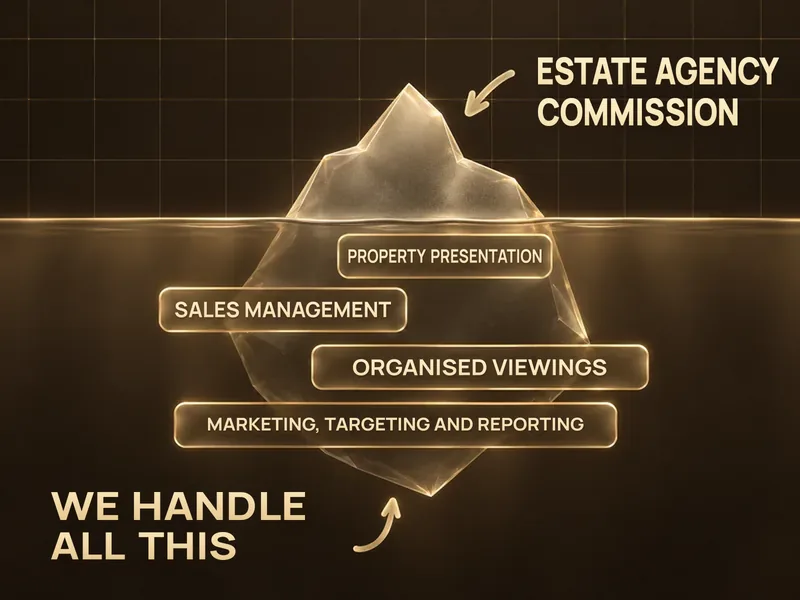
Estate agent commission: what you pay and what you get
Estate agent commission when selling a flat: understand VAT, included services and extra costs, then compare agency quotes by their final price and scope.
Read -

| Petr Kučera
Realitka roku: how to use the ranking when choosing an agency
Learn what Realitka roku and Realiťák roku measure, how branch and agent rankings are calculated and how to use them as one factor when choosing an agency.
Read