Sell directly to a property buyer or through an estate agent?
 Written and reviewed by Bc. Petr Kučera, MSc., MBA

We suggest starting with two figures: the exact amount you are being offered and the property value it is based on. As Peníze.cz points out, if the buyer sets that value, the percentage and the value need to be judged together.
The offer date, the signing date, the payment due date, the date you receive the money and the date the transfer is completed are separate milestones. For property recorded in the Land Register (Cadastre of Real Estate), payment alone does not transfer ownership: see Section 1105 of the Civil Code (Act No. 89/2012 Coll.).
The legislation and available information discussed here are current as at 9 November 2026.
Property buyouts: is the provider buying or brokering?
In a direct purchase, the buyer is the party that signs the contract with you. Real estate brokerage is a different activity: its aim is to bring about a real estate contract, and it always includes finding an interested party, whether an individual or a company. The distinction is set out in Sections 2 and 3 of the Real Estate Brokerage Act (Act No. 39/2020 Coll.).
We recommend looking at what the person or company actually does. Calling a service a ‘buyout’ does not settle its legal role. In practice, we would ask who is buying on their own account and who is brokering the sale. The starting point is Sections 2 and 3 of Act No. 39/2020 Coll. and the difference they draw between a real estate contract and brokerage.
For more on working with an estate agency, read our guide to what a brokerage agreement covers.
A flat buyout offer: what value is it based on?
A high percentage needs more context
In an article published on 15 July 2021, Peníze.cz recommends comparing the actual amounts in each offer along with the values they start from. Where the buyer sets both the percentage and the value it applies to, the two figures should be assessed together.
We would go one step further. Ask for the valuation documents and find out who prepared them and when. Then check who set the value and what evidence they used.
A Prague-wide average does not by itself determine the price of an individual premium flat (Czech Statistical Office (ČSÚ) and Peníze.cz).
We explain how a price estimate differs from an expert valuation report in a separate article.
What does the promise of a quick buyout mean?
Money received and ownership registered
The Land Register is a public register recording property ownership. For property recorded there, the buyer acquires ownership through registration, under Section 1105 of the Civil Code (Act No. 89/2012 Coll.). Paying the purchase price alone does not transfer ownership. That rule does not establish whether a particular advance payment is safe.
Registration here means entering the ownership right in the Land Register. It cannot be authorised until 20 days have elapsed from dispatch of the information required by Section 16(1), rather than from submission of the application. This 20-day protection period does not tell you the total time from enquiry to receipt of payment. See Sections 18(1) and 16(1) of the Cadastral Act (Act No. 256/2013 Coll.).
The Czech Office for Surveying, Mapping and Cadastre (ČÚZK) reported a nationwide average registration time of 22 days for October 2026.
These Land Register rules do not automatically apply to a cooperative share. We cover that case separately in our article on selling a cooperative flat.
Time on the market is not time to payment
According to commercial industry data from Realiťák roku (a Czech estate agent award)/CEMAP, the time Prague flats spent on the market was 56 days in April 2026, compared with 117 days in April 2025. These figures measure advertising periods, not property buyouts or time until the purchase price is received.
To see how the stages fit together, read our guide to selling a flat in Prague.
Compare both offers using the same questions
We recommend using the same overview for every offer you receive. The price questions are based on the advice from Peníze.cz. The questions about roles and timing are a practical reading of the rules on brokerage in Sections 2 and 3 of Act No. 39/2020 Coll. and on acquiring ownership in Section 1105 of Act No. 89/2012 Coll. The actual dates and terms come from each specific offer and contract.
| Question to check | Property buyout | Real estate brokerage |
|---|---|---|
| Who is the buyer, and who is the broker? | Record the offer’s details | Record the offer’s details |
| What exact amount is offered or expected? | Record the offer’s figure | Record the offer’s figure |
| What documented valuation forms the basis? | Add the supporting document | Add the supporting document |
| Who prepared the valuation, and when? | Add the author and date | Add the author and date |
| When is the offer due to be presented? | Add the conditions | Add the conditions |
| When is signing expected? | Add the conditions | Add the conditions |
| When does the purchase price fall due? | Record the contractual terms | Record the contractual terms |
| When will the money reach your account? | Record the contractual terms | Record the contractual terms |
| How does the contract address completion of registration? | Record the contractual terms | Record the contractual terms |
Alongside the amount offered, check the estate agency’s commission when comparing the financial outcome.
Within the scope of the data from the Czech Statistical Office, the advice from Peníze.cz and Section 44a(4) of Act No. 120/2001 Coll., this overview can be used to check a specific offer and its legal regime.
Buyouts during enforcement or insolvency
Enforcement: one specific statutory route
Enforcement is the compulsory recovery of a debt. If a buyout is presented as a solution, first establish the applicable procedure and every consent required under the enforcement rules. The route in Section 44a(4) of Act No. 120/2001 Coll. does not allow an arbitrary discount or establish that the enforcement officer’s consent alone is sufficient. See also the Ministry of Justice’s enforcement guidance.
Under Section 44a(4) of Act No. 120/2001 Coll., the debtor subject to enforcement may sell property to pay the claims being enforced and the costs. A claim is an entitlement to payment. The property must not be subject to another enforcement proceeding. Written consent is required from the enforcement officer, the creditor whose claim is being enforced and all creditors who have lodged claims.
For this procedure under Section 44a(4) of Act No. 120/2001 Coll., the price must be at least the usual price established by an expert valuation report. It falls due on signing and must be paid to the enforcement officer. These conditions apply only to this particular route and do not apply to other enforcement sales.
An expert valuation report is expressly required by the price condition in Section 44a(4) of Act No. 120/2001 Coll. That requirement does not make such a report compulsory for every property buyout.
Insolvency: bankruptcy and debt relief have different rules
Insolvency proceedings provide a court process for resolving a debtor’s insolvency. Bankruptcy is one way of doing so. Once bankruptcy is declared, authority to deal with the insolvency estate, the assets included in the proceedings, passes to the insolvency administrator under Section 246(1) of Act No. 182/2006 Coll. This does not apply across every stage of every proceeding. For proceedings begun earlier, check the transitional provisions and applicable legislation.
Section 409(4) of Act No. 182/2006 Coll. concerns debt relief through a repayment schedule combined with realisation of the insolvency estate. The administrator sells assets securing a debt at the request of the secured creditor, whose claim is backed by those assets. Sale follows approval of this form of debt relief and cannot take place before the secured claim’s validity, amount and ranking have been established. Check transitional provisions for older proceedings.
As a rule, the insolvency administrator needs the consent of both the insolvency court and the creditors’ committee to sell outside an auction. The creditors’ committee is the body representing the creditors. One exception is the sale of secured property on the instructions of the secured creditor. The law sets out other exceptions as well. The legal basis is Section 289 and Section 293(2) of Act No. 182/2006 Coll.
Co-ownership shares, tenancies and debts linked to a unit
When co-owners have a right of pre-emption
A right of pre-emption means the share being transferred must first be offered to the person who holds that right. Co-owners have this right by law only in limited cases. It applies to co-ownership that arose without the co-owners being able to influence how the related rights and duties came about. It lasts six months from the date that co-ownership arose. The law sets out exceptions, and the right also covers transfers made without payment. What matters is how the co-ownership arose and who is acquiring the share. The rule does not apply to a cooperative share. The legal basis is Section 1124 of the Civil Code (Act No. 89/2012 Coll.).
This limited regime was introduced by Act No. 163/2020 Coll., which took effect on 1 July 2020.
What happens when a tenanted flat is sold?
According to dTest and Section 2221 of Act No. 89/2012 Coll., the new owner takes over the landlord’s rights and duties under the lease. The sale alone does not end the tenancy. This basic rule does not guarantee that the flat will be vacated, and no specific percentage discount for the tenancy follows from it. Viewings, the right of pre-emption and how rent and the security deposit are settled between the old and new owner are covered in our article on selling a flat with a tenant.
Which debts may pass with a flat?
For a residential unit, Section 1186(2) of Act No. 89/2012 Coll. allows certain debts owed to the person responsible for building management to pass to the buyer: debts for building and land management, related services and advance payments. They pass only if the buyer should and could have discovered them. The seller remains liable as guarantor, meaning they must pay if the buyer does not. This does not automatically transfer all the seller’s liabilities and does not apply to a cooperative share.
Under Section 1186(3) of Act No. 89/2012 Coll., the seller must provide a certificate from the person responsible for building management identifying the relevant debts or confirming their absence. If a debt could not be discovered from it, the law presumes the buyer could not have discovered that debt. The same presumption applies if, despite a request, the certificate was not issued without undue delay.
Selling, staying on and the option to buy back
In its opinion dated 30 November 2023, the Czech National Bank (CNB) explains that a sale with continued use and a buyback option may, depending on the true nature of the obligations, constitute consumer credit, subject to consumer lending rules. According to the CNB, some arrangements may also constitute an impermissible form of debt security.
The CNB specifically highlights financing arranged after a requested loan has been refused, for example because of insufficient creditworthiness, meaning the ability to repay. The obligations must be assessed together in each case. The opinion does not automatically bring every property buyout or every sale and leaseback arrangement within consumer credit rules.
Where consumer credit is secured by real estate or by a right in rem over it, the only permitted form of security is a lien. A lien is a right that secures a debt. Other arrangements of this kind are disregarded. This is not a general ban on transfers by way of security in other legal relationships. The rule is in Section 113(2) of the Consumer Credit Act (Act No. 257/2016 Coll.).
Under Section 86(1) of Act No. 257/2016 Coll., a lender may provide consumer credit only where its assessment of the consumer’s creditworthiness leaves no reasonable doubts about the consumer’s ability to repay. This rule does not, by itself, determine the legal nature of every sale followed by continued use.
A clause giving the seller the right to buy the property back, known in law as a reservation of the right of repurchase, is a separate concept. It can also be agreed for real estate. If it is agreed as a right in rem, it is entered in the Land Register by registration. A purely contractual commitment is not automatically a right in rem and does not automatically have the same effects on third parties. The legal basis is Sections 2135 to 2138 of Act No. 89/2012 Coll. and information from ČÚZK.
A low price: usury or laesio enormis
In the legal sense used here, usury requires two things at once: the other party abuses a weakness of yours that the law defines, and what each side gives is grossly disproportionate. A price that is simply unfavourable is not enough to make a contract usurious. In its judgment of 20 September 2023, file no. 23 Cdo 2885/2022, the Supreme Court (decision on Section 1796 of the Civil Code) explained that a court takes the absolute nullity of such a contract into account even without a party’s motion.
Besides the other elements of usury, it must be established that the person who benefits from it acted intentionally. Indirect intent is the minimum. This is set out in paragraph 12 of the Supreme Court’s decision (usnesení) of 3 June 2025, file no. 28 Cdo 2378/2024 (decision on Section 1796 of the Civil Code). The decision does not mean that any other buyout contract is valid.
Laesio enormis (neúměrné zkrácení, Section 1793 of the Civil Code) describes a situation in which what each side gives is grossly disproportionate. It is a different concept from usury. In its judgment of 25 January 2022, file no. 33 Cdo 42/2021, the Supreme Court (decision on Section 1793 of the Civil Code) found that a purchase price of 72.13% of the usual price did not amount to laesio enormis in that case. The conclusion applies only to that dispute. It does not set a general percentage threshold or say anything about market discounts, and it does not mean other contracts are legally safe.
Checks before signing and after the transfer
Before signing, we recommend returning to the comparison table. In line with the advice from Peníze.cz, check the actual amount and valuation evidence. Identify the buyer and any broker, using the distinction in Sections 2 and 3 of the Real Estate Brokerage Act (Act No. 39/2020 Coll.).
When you are under time pressure, Peníze.cz advises taking extra care to check the contracts and whether the other party can be trusted. This is practical advice. It is not an additional legal condition for signing.
The basic administrative fee for accepting an application initiating proceedings to authorise registration is CZK 2,000, under item 120(a) of the fee schedule to Act No. 634/2004 Coll. See also ČÚZK’s administrative fee rates. This is neither the total transfer cost nor a service price.
The parties may agree who bears the cost. Section 3 of Act No. 634/2004 Coll. determines who owes the fee to the authority and when several persons are jointly and severally liable. Where that liability applies, the authority may demand the whole fee from any liable fee payer. A private agreement does not alter the statutory obligation to the authority.
At settlement, we recommend separately checking ownership registration, payment of the purchase price and the specific unit-related debts that may pass to the buyer. A certificate of building-related debts does not replace evidence of payment of the purchase price. These are separate checks, drawing on Sections 1105 and 1186 of Act No. 89/2012 Coll.
If there is a loan and a mortgage lien on the property, see our article on selling a flat with a mortgage. For the general process, including links on escrow and tax, see how to sell a flat in Prague.
How we manage a sale at GATSBYS
GATSBYS is a Prague estate agency that represents sellers. We focus on selling flats and villas, and we work only in Prague.
We work with sellers under an exclusive brokerage agreement, with GATSBYS acting as the sole agent. The agreement runs for three months and can be extended by agreement.
We assess the likely sale price and identify risks, then prepare the presentation of the property: the listing copy, photographs and floor plan. We run the marketing campaign, covering the media plan, creative work, targeting and reporting. We handle the sale itself, including communication with interested buyers, managed viewings and negotiation of terms. On the legal side, we coordinate with a law firm.
Expert commentary
When I assess a buyout, I start with the value used to calculate the price. I need to know who set it and what evidence they used before judging the offer’s merits. I recommend asking for a breakdown showing the amount, the valuation, who prepared it and when.
I distinguish receiving money quickly from completing the transfer. For property recorded in the Land Register, I compare the signing date, payment due date, date the money reaches your account and completion of registration. The buyer acquires ownership only through registration.
I see a buyout as a potentially reasonable option, depending on the whole contract. A figure alone tells me too little about when and on what terms payment will arrive. Where enforcement, insolvency or continued use of the flat is involved, I recommend a lawyer’s review before signing.
Petr Kučera, founder of GATSBYS
Frequently asked questions
How does a direct purchase differ from real estate brokerage?
In a direct purchase, the buyer is the party that contracts with the seller. Real estate brokerage is an activity aimed at bringing about a real estate contract, and it always includes finding someone interested in entering into that contract. The legal basis is Sections 2 and 3 of Act No. 39/2020 Coll.
Does paying the purchase price make the buyer the owner?
No. Under Section 1105 of Act No. 89/2012 Coll., ownership of property recorded in a public register is acquired through registration. Payment alone does not transfer ownership. This rule does not automatically extend to a cooperative share.
When does the 20-day protection period start?
It begins when the information required by Section 16(1) is dispatched. Registration cannot be authorised until 20 days have elapsed from that event. It is not automatically authorised 20 days after the application is submitted. See Sections 18(1) and 16(1) of the Cadastral Act (Act No. 256/2013 Coll.).
What is the basic fee for a registration application?
The basic fee is CZK 2,000 for accepting an application initiating proceedings to authorise registration, under item 120(a) of the fee schedule to Act No. 634/2004 Coll. It does not represent all transfer costs or a service price.
Is the enforcement officer’s consent enough under Section 44a(4)?
No. Section 44a(4) of Act No. 120/2001 Coll. requires written consent from the enforcement officer, the creditor whose claim is being enforced and all creditors who have lodged claims. The property must not be subject to another enforcement proceeding. The purpose of the sale must be to pay the enforced claims and costs, and the price must be at least the usual price established by an expert valuation report. Payment is due on signing, to the enforcement officer.
Do other co-owners always have a right of pre-emption?
Not always. The legal right of pre-emption applies to co-ownership that arose without the co-owners being able to influence how the related rights and duties came about. It lasts six months from the date the co-ownership arose. The law sets out exceptions, and the right also covers transfers made without payment. What matters is how the co-ownership arose and who is acquiring the share. The rule does not apply to a cooperative share. The legal basis is Section 1124 of Act No. 89/2012 Coll.
Is an offer at a certain percentage automatically legally safe?
No. A percentage alone does not make an offer legally safe. To find usury, a court looks at gross disproportion between what each side gives, abuse of a weakness of the other party as defined by law, and intentional conduct by the person who benefits. See the Supreme Court on Section 1796 of the Civil Code and the Supreme Court on intent in usury.
In one case, the Supreme Court (decision on Section 1793 of the Civil Code) found that a price of 72.13% of the usual price did not amount to laesio enormis. That decision does not set a general safe threshold for other contracts.
Can a right of repurchase be agreed for real estate?
Yes, it can be agreed for real estate too. If it is agreed as a right in rem, it is entered in the Land Register by registration. A purely contractual arrangement is not automatically a right in rem and does not automatically have the same effects on third parties. The legal basis is Sections 2135 to 2138 of Act No. 89/2012 Coll. and information from ČÚZK.
This article reflects Czech law as at 9 November 2026. A specific contractual or tax situation should be assessed by a lawyer or a tax adviser, depending on what it involves. If you sell through GATSBYS, we coordinate with a law firm.
Considering selling a flat or villa in Prague? Get in touch.
Request a sale assessment founder of GATSBYS
Selected for you
-
| Petr Kučera
Selling a flat in Prague
Selling a flat in Prague, from preparing documents to receiving payment: Land Register, escrow, PENB, SVJ confirmation, mortgage, tax and cooperative flats.
Read -
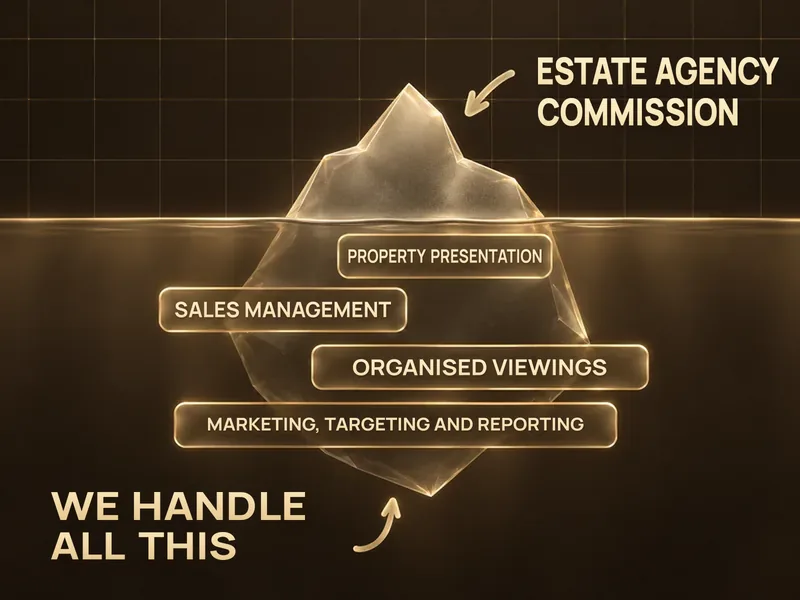
| Petr Kučera
Estate agent commission: what you pay and what you get
Estate agent commission when selling a flat: understand VAT, included services and extra costs, then compare agency quotes by their final price and scope.
Read -

| Petr Kučera
Buy-to-let flat in Prague: yield, financing and what to check before you buy
Prague buy-to-let flats: gross yields from public data, how to work out your own net yield, CNB investment mortgage limits, tax and checks before you buy.
Read