Selling property in 2026: when income is taxed and when it may be exempt
 Written and reviewed by Bc. Petr Kučera, MSc., MBA

When preparing a sale, we recommend first checking whether the income from it could be exempt. Exemption means the income is not subject to income tax. According to the Financial Administration, where you actually lived may be decisive. Other possible routes are a long enough period of ownership, under the rules introduced by Act No. 386/2020 Coll., and using the money for your own housing under the statutory conditions of Section 4(1)(b) of the Income Tax Act.
According to the Financial Administration, if a private sale outside business assets is not exempt, tax is generally not calculated on the full sale price. Expenses count only where allowable and substantiated. As the Financial Administration explains, the calculation depends on your overall tax base, including other income. The tax base is the amount used to calculate tax.
We cover Czech income tax rules for individuals, focusing on private flat sales. The legal basis is the Income Tax Act, Act No. 586/1992 Coll., in the version effective from 1 August 2026 to 31 December 2026. Earlier cases must be assessed under the rules for the period concerned.
The legislation and figures in this article are stated as at 12 November 2026.
Step one: how and when you acquired the property
The legal basis of acquisition explains how you obtained the property, for example by purchase, gift or inheritance. Guidance from the General Financial Directorate (GFŘ) shows that the relevant date can differ between these methods. We recommend checking the documents for your particular acquisition.
Purchase, inheritance and gift: different rules
Under GFŘ Instruction D-59, when property recorded in the Land Register (Cadastre of Real Estate) is transferred by contract, both its acquisition and its sale are governed by the legal effects of the approved registration of ownership. Those effects date from the delivery of the application for registration in the Land Register to the competent cadastral office. The registration must then be approved, so filing the application is not enough by itself. Neither signing the agreement nor paying the price is decisive. Other ways of acquiring property have their own rules.
According to the same GFŘ instruction, for an ordinary inheritance the decisive moment is the death of the deceased, meaning the person whose estate is inherited. The court then confirms the acquisition. A later entry in the Land Register does not replace the date of death. The date of death also determines which set of time-based rules applies. Where the right of inheritance is deferred and passes to a subsequent heir later, a separate assessment is needed.
According to the Financial Administration, the deceased person’s documented ownership period counts towards the test only where the heir is a relative in the direct line, meaning an ancestor or descendant, or a spouse.
Section 4 of the Income Tax Act provides no equivalent credit for the donor’s ownership period. For a later sale, the holding period test starts when you acquire the gift.
What you need for the assessment
We recommend working through this checklist before selling. It draws on the statutory conditions and GFŘ guidance.
| Area to assess | Information needed |
|---|---|
| Acquisition | Legal basis of acquisition and relevant date |
| Actual residence | Whether you lived there, when, and what evidence is available |
| Tax history | Any inclusion in business assets and depreciation claimed |
| Ownership arrangements | Community property of spouses (SJM), or shares acquired at different times |
| Sale proceeds | Intended use for your own housing needs and evidence of that use |
| Filings and evidence | Potential obligations and available documents |
Under Section 4(4) of the Income Tax Act, an individual’s business assets include property that is, or has previously been, recorded in their accounts or tax records. Letting a flat does not, by itself, establish that classification.
We recommend looking at three questions separately: whether you are entitled to an exemption, how you will document your expenses and which filings apply. Under the Income Tax Act, each question rests on a different basis.
Exempting the income from a sale: three routes to consider
Two years of actual residence versus a registered address
The Financial Administration explains that income from the sale of a family house, or of a unit as defined by law, including the related land, may be exempt from income tax. You must have had your residence there for at least two years, and that whole period must fall immediately before the sale. All the other conditions must be met as well. Exclusions linked to business assets are assessed separately.
Your residence is the place where you actually live. Your registered permanent address is only one piece of evidence. The Supreme Administrative Court (NSS) looks at all the documented circumstances together. If the seller used only part of a house, the specific way it was used matters.
For a unit to qualify through the residence route, it must contain no non-residential space other than a garage, cellar or storeroom. All other conditions in Section 4(1)(a) of the Income Tax Act must also be satisfied.
The five-year and ten-year holding periods
The holding period test is the required interval between acquiring a property and selling it. It is measured from the date of acquisition, as reflected in Act No. 386/2020 Coll. and the GFŘ methodology.
| Acquisition date | Required ownership period |
|---|---|
| On or before 31 December 2020 | More than five years, under the transitional rules of Act No. 386/2020 Coll. |
| From 1 January 2021 | More than ten years, according to GFŘ guidance |
The applicable period must be exceeded. Merely reaching the boundary is insufficient. For a sale close to that boundary, we recommend checking the precise relevant dates and statutory exclusions, meaning circumstances that prevent the exemption. Act No. 386/2020 Coll. governs the transition between regimes, with methodological guidance from GFŘ.
Own housing as a route, and its historical limits
‘Your own housing needs’ refers to using money for your own housing in ways defined by law. Under Section 4(1)(a) of the Income Tax Act, this may allow exemption where you lived in the property immediately before selling but for less than two years. The other conditions and statutory exclusions still apply.
For property acquired from 1 January 2021 and owned for no more than ten years, Section 4(1)(b) of the Income Tax Act may provide a route through using the proceeds for your own housing needs. You need not have lived there previously, so a buy-to-let flat may qualify. The other conditions, absence of exclusions and compliance with Section 4b remain essential.
For property acquired on or before 31 December 2020, that route under Section 4(1)(b) is unavailable under Act No. 386/2020 Coll. Any possibility under Section 4(1)(a) must be assessed separately.
Permitted uses of the proceeds and the time limits
Under Section 4b of the Income Tax Act, qualifying uses include buying, building, maintaining or making structural alterations to a home, as well as certain contributions linked to membership. If you buy land, construction of the prescribed kind must start within four years. Paying out a share when community property of spouses (SJM) or an estate shared by co-heirs is settled also qualifies, if the purpose is to obtain a house or unit as defined by law. This is set out in Section 4b(1)(f). You may also repay a relevant credit or loan, where ‘loan’ means money lent to you. The rules do not extend to land in general, a buy-to-let flat or other kinds of financial settlement.
According to the Financial Administration, you must use the money by the end of the tax period immediately following the year you received it. The law also allows corresponding use in the immediately preceding tax period. A tax period is the interval for which tax is assessed.
Mortgage repayment and regular instalments
In its legally non-binding opinion of 17 June 2026, GFŘ states that full repayment of a qualifying loan, including payment of its remaining balance, may count if the statutory conditions are met. This includes principal, meaning the debt excluding interest, and interest. According to the opinion, ordinary ongoing mortgage instalments are insufficient.
The same GFŘ opinion states that repaying a loan on a flat that has already been sold cannot be recognised as a matter of course if the seller neither owns that flat nor uses it for their own housing. Repaying a mortgage does not by itself mean the exemption conditions are met.
A separate article explains how the transaction steps fit together when selling a flat with a mortgage.
Housing needs abroad
In a non-binding opinion dated 17 June 2026, the GFŘ states that housing abroad can also meet your own housing needs. You must actually live there and prove that you meet all the statutory requirements. The GFŘ also accepts more than one own housing need, provided there is a real and objectively justified connection with your housing.
Using only part of the sale proceeds
The Financial Administration’s interpretation concerns the money received from the sale. Using only the profit, meaning the difference between the acquisition and sale prices, does not amount to using all the proceeds.
According to the Financial Administration, where only part of the proceeds is used, only that part is exempt. The remainder is taxable as other income under Section 10 of the Income Tax Act. Expenses must be allocated to the taxable part or taken into account proportionately.
What happens if the money is not used as required
If the money is not used as required, Section 10 applies in the tax period immediately following the year of receipt. For qualifying land where construction has not begun, the relevant year is when the four-year deadline expires unmet. If you dispose of the land earlier, the year of disposal applies. These rules follow Section 4b(4) and (5) of the Income Tax Act.
In its judgment of 8 July 2015, 4 Afs 86/2015-36, the NSS concluded that, under the legislation then in force, the tax liability arose as soon as the income was received. Current cases must be assessed under Section 4b of the Income Tax Act, specifically subsection (4).
Two separate reporting duties: Section 4b and Section 38v
Keep three filings distinct: an income tax return, notification of money received for your own housing needs under Section 4b, and general notification of exempt income under Section 38v. Annual property tax is a separate matter, explained by the Financial Administration. Even an exempt sale may therefore involve administrative duties.
Notifying the tax authority of money received for your own housing needs
If you claim this exemption by using the proceeds for your own housing, Section 4b of the Income Tax Act requires you to notify the relevant tax authority that you received the money. The deadline is the tax return filing deadline for the year of receipt.
For income received in 2026, failure to notify, or late notification, does not by itself remove the exemption. The substantive conditions for using the money still apply under Section 4b of the Income Tax Act. Read older guidance alongside Act No. 163/2024 Coll., particularly Articles III and IV.
Exempt income over CZK 5 million: Land Register exception
Section 38v requires you to report each individual item of exempt income that exceeds CZK 5,000,000. The deadline is the tax return deadline for the year in which you received the income. The law makes an exception where the tax authority can obtain the information it needs from available registers or records. The authority must publish a list of these sources on its official notice board and make it available remotely. The exception is defined in Section 38v(3) of the Income Tax Act.
According to the Financial Administration, the Land Register exception applies to exempt income from sales of property recorded in the Czech Land Register under Section 4(1)(a), (b) and (s).
According to a GFŘ opinion and Financial Administration information, inheriting property or receiving an exempt gift above CZK 5,000,000 requires notification. A Land Register entry does not replace notification of these acquisitions.
A notification under Section 38v must give the amount of the income, how it was obtained and the date it arose. If income that has to be reported falls into community property of spouses (SJM), it is enough for one spouse to file the notification. The legal basis is Section 38v of the Income Tax Act.
According to the Financial Administration, there is no mandatory form for the notification. Its website offers an optional template from the Ministry of Finance.
Penalties for breaching the Section 38v notification duty
Section 38w of the Income Tax Act distinguishes the following situations. Penalties are calculated on unreported income.
| Failure and subsequent action | Penalty as a percentage of unreported income |
|---|---|
| Late notification on your own initiative, without a request | 0.1% |
| Notification following a request | 10% |
| No notification even after the additional deadline expires | 15% |
Under Section 38w of the Income Tax Act, these rates apply to breaches of the relevant Section 38v duty. They cannot be applied to Section 4b notifications or other late filings.
The tax authority may waive the penalty partly or entirely where the circumstances provide a justifiable reason for the failure, under Section 38w(6) of the Income Tax Act.
Non-exempt sale: tax base, allowable expenses and tax rates
Income from a private sale that is not exempt and does not involve business assets is, as a rule, other income under Section 10(1)(b) of the Income Tax Act. This applies only if the income does not fall under Sections 6 to 9 of the Act. The partial tax base is the income minus the expenses that you can prove and that the law allows. It is the result for this category of income.
Under Section 10(4) of the Income Tax Act, expenses exceeding income in this regime do not create a deductible tax loss. You cannot use that excess to reduce taxable employment income or other income categories.
Expenses and supporting evidence
Under Section 10(5) of the Income Tax Act, the documented acquisition price is an allowable expense. So are amounts spent on technical improvement, repairs and maintenance, and other costs connected with completing the sale. Technical improvement means improving the property in the sense used by the tax rules. The value of the seller’s own work cannot be claimed.
Under Section 10(5) of the Income Tax Act, you can claim the commission only if you can prove it, it is tax-deductible and it relates to completing the sale. For the service itself, see our article on estate agency commission.
If you paid property acquisition tax when buying and now face a taxable sale, we recommend checking its treatment as an expense with a tax adviser. Article IV, point 5 of Act No. 386/2020 Coll. preserves earlier rules for specified tax already paid.
Expenses on a gifted or inherited flat
Some property is acquired without payment, meaning without anything given in return, as with a gift or an inheritance. When such property is sold in a taxable sale, the expense is its value under the Valuation Act as at the date of acquisition. A special regime applies to tangible assets depreciated under Section 26 et seq. that were let out or included in the business assets of a self-employed activity. In that regime, the expense is the residual value under Section 29(2). The residual value is the input price less the depreciation allowed by law. Depreciation means claiming the value of an asset gradually for tax purposes. A current estimate of the sale price, or any valuation report on the usual price, may not meet these requirements. The legal basis is Section 10(5) of the Income Tax Act.
For gifted property, the Financial Administration states that you do not have to document the expense with an expert valuation report. What you do need is a price determined under the valuation regulations as at the date of acquisition. The valuation method must be clear and justified. Anyone may prepare the valuation, and no particular form is prescribed.
For an inheritance, the Financial Administration states that the expense is valued as at the date of the deceased’s death. You can use the value from the inheritance proceedings only if it complies with the valuation regulations.
The NSS also considered the valuation of land acquired without consideration and subsequently sold, in judgment 1 Afs 46/2026-37 of 4 June 2026.
Our related article explains the difference between a price estimate and an expert valuation report.
Tax rates in 2026: 15% and 23%
For 2026, the rates are 15% and 23%, with 23% applying only to the portion of the tax base above CZK 1,762,812. Where you receive income under Sections 6 to 10 concurrently, the relevant partial tax bases are added under Section 5(2). The rates and threshold follow Section 16 of the Income Tax Act.
The Financial Administration gives the average wage parameter used for the threshold as CZK 48,967, multiplied by 36.
Worked example of a partial tax base
This example assumes all income is taxable and every included expense is substantiated and allowable. The result is a partial tax base.
Income of CZK 10,500,000 minus expenses of CZK 8,000,000, CZK 400,000 and CZK 363,000 = partial tax base of CZK 1,737,000.
All amounts are illustrative. Any commission included must relate to the completed sale and meet tax deductibility requirements. The example shows how expenses reduce the partial tax base under Section 10 of the Income Tax Act.
Letting, business assets, SJM and co-owned shares
Letting and depreciation
Under Section 4(1)(b) of the Income Tax Act, letting the property under Section 9 does not by itself rule out the exemption if you pass the holding period test. You do need to check whether the property was ever included in business assets. Actual residence and classification as a business asset are separate questions, as the GFŘ methodology shows.
A specific rule applies to tangible assets depreciated under Section 26 et seq. that were also let out or included in the business assets of a self-employed activity. If such property is sold in a taxable sale under Section 10, the expense is the residual value under Section 29(2). Exemption and the valuation of expenses are two separate assessments. The legal basis is Section 10(5) of the Income Tax Act.
We cover selling a flat with a tenant and checks for a buy-to-let flat in separate articles.
Business assets and future sales
The residence route excludes property in business assets and the period up to two years after its removal. The exemption also does not apply to income from a future sale made within two years of acquisition or removal from business assets. These exclusions appear in Section 4(1)(a) of the Income Tax Act.
For the holding period test, the exclusion after removal from business assets depends on when you acquired the property. If you acquired it before 1 January 2021, the five-year exclusion still applies. For later acquisitions, the exclusion lasts ten years. This follows from Act No. 386/2020 Coll. and the Financial Administration’s guidance.
For property acquired on or after 1 January 2021, the exemption under Section 4(1)(b) of the Income Tax Act does not apply to income from a future sale made within ten years of acquisition or removal from business assets. The exclusion still applies if the purchase agreement is signed later. For earlier acquisitions, the older five-year regime applies, which is also based on Act No. 386/2020 Coll.
SJM and shares acquired over time
Under Section 10(2) of the Income Tax Act, Section 10 income that falls into community property of spouses is taxed in the hands of one spouse. Property that was previously a business asset is subject to a special rule. The Financial Administration’s guidance also deals with this point.
For SJM income to qualify through the residence route, one spouse meeting the conditions is sufficient, provided the property is not, and has never been, a business asset of either spouse. The relevant sentence in Section 4(1)(a) of the Income Tax Act sets no time limit on this simplification.
If this simplification does not apply, the other exemption routes are assessed separately, each under its own legal rule. This follows from Section 4(1)(a) of the Income Tax Act.
Income arising from the settlement of SJM falls outside the scope of personal income tax under Section 3(4)(c) of the Income Tax Act. A subsequent sale to a third party requires a fresh assessment.
Where property is co-owned, each person owns a defined share. Under Section 4 of the Income Tax Act, the exemption is assessed for each seller on the basis of the conditions that seller meets.
GFŘ Instruction D-59 states that parts acquired at different times are assessed proportionally. The parts may have different acquisition dates, and the holding period test may be met for some but not others. For each part, the test runs from the date that part was acquired.
Section 4(2) of the Income Tax Act preserves the running of the holding period in specified cases: settlement of co-ownership in accordance with shares, creation of units, settlement of SJM and division of land. Continuity is limited to the corresponding shares and the situations listed by law.
Cooperative flat transfers and land sold separately
Under the law in force since 1 January 2014, previous membership of the housing cooperative and the cooperative tenancy do not count towards the holding period test for a unit acquired later. This follows from NSS judgment 2 Afs 211/2020-29 and Section 4 of the Income Tax Act.
We explain the transfer of a cooperative flat into direct ownership, meaning a unit registered in the Land Register, separately from selling a cooperative flat.
Land sold on its own is assessed separately. The Municipal Court in Prague ruled on this in decision 11 Af 47/2011-61 of 10 December 2013, which concerned the year 2007. It held that, for that period, a former connection with a family house did not by itself make the land exempt under the residence route. Any other exemption is assessed separately.
What to arrange and document after the sale
Tax return and deadlines
The Financial Administration states that exempt income is not included in an income tax return. A non-exempt private sale is reported under Section 10 where a return is required. Separate notification duties may remain even where the sale is exempt.
For a tax return covering a tax period of at least 12 months, the general deadline is three months after the end of the period. The deadline is four months if the return is not filed within the general deadline and is then filed electronically. It is six months if a mandatory audit applies, meaning a compulsory audit of the financial statements, or if a tax adviser files the return later and the statutory conditions are met. Being represented, or filing electronically, does not by itself give you six months. The conditions are set out in Section 136 of the Tax Procedure Code.
Keep your evidence after filing
GFŘ guidance and case law identify potentially relevant evidence including acquisition and Land Register documents, payment and expense records, proof of actual residence and evidence of how the proceeds were used. This is not an exhaustive list. The tax authority may examine actual residence in later tax proceedings, as illustrated by the NSS.
We recommend individual assessment under the law and GFŘ guidance, particularly near holding period boundaries or where there are unusual acquisitions, valuation questions, complex SJM arrangements, shares acquired over time, partial use for housing, loans or uncertain expenses.
Annual property tax is a separate regime
Act No. 386/2020 Coll. abolished property acquisition tax from 26 September 2020. Earlier rules remain for older cases whose filing deadline expired before 31 March 2020. Any historical obligations still outstanding require individual assessment. Income tax and annual property tax continue to apply under their respective rules.
According to the Financial Administration, annual property tax is based on the circumstances as they stood on 1 January of the relevant year.
According to the Financial Administration, if you stop being liable for tax on all your properties in the area of the same tax administrator, you must report this. The deadline is the end of January of the following tax period. If that falls on a non-working day, the deadline moves in line with the Tax Procedure Code. If you still have other taxable properties in that area, you report the change in a regular or partial tax return for the next period.
Health and social insurance impact
According to the General Health Insurance Company (VZP) and the Czech Social Security Administration (ČSSZ), profit from a private sale under Section 10 attracts no percentage-based health or social insurance contributions. Business activity and other grounds for insurance obligations require separate assessment.
VZP explains the status of a person without taxable income (OBZP). It applies where, throughout a calendar month, you have neither employment nor self-employment establishing the relevant insurance status, and the state does not pay your contributions. Sale income under Section 10 is disregarded for this condition.
Selling a flat in Prague: the same tax rules, the right documents
The Income Tax Act and GFŘ guidance apply the same exemption conditions and income tax rates in Prague as elsewhere. Local coefficients concern annual property tax only; they do not alter income tax on a sale.
Section 4(1)(a) and (b) set no general exemption limit of CZK 40 million. Whatever the price, the other conditions still apply. Section 38v covers individual items of exempt income exceeding CZK 5,000,000. The Financial Administration states that this notification is not filed for the relevant exempt sales of property recorded in the Czech Land Register. The limit in Section 4(3) belongs to the exemption for transfers of crypto-assets under letter (zk). The legal basis is Section 4 of the Income Tax Act.
We recommend combining sale preparation with a tax assessment of the actual documents. Follow the relevant dates identified in GFŘ guidance, and track the deadline for using the money separately from the deadline for notifying its receipt.
We are a Prague estate agency that represents sellers. When you sell through GATSBYS, we coordinate the work of the law firm. For an overview of the process, see our guide on how to sell a flat in Prague.
For wider preparation, read about property price trends and choosing an estate agency.
Expert commentary
For me, the most important first step is to establish how and when you acquired the flat. That establishes whether the relevant ownership test calls for more than five or more than ten years. Residence or using the proceeds for your own housing may offer another route, subject to further conditions. I would clarify this before discussing the price.
I would focus on where you actually lived. Registered permanent residence is only one piece of evidence. I recommend keeping proof of residence together with the acquisition agreement and expense records, as the tax authority may examine these matters later.
I would also check notification duties even where the sale is exempt, particularly if you intend to use the proceeds for your own housing. My practical recommendation is to record the deadlines immediately after signing the purchase agreement. For borderline holding periods, inheritance, gifts, SJM or ownership shares, I recommend assessment by a tax adviser.
Petr Kučera, founder of GATSBYS
Frequently asked questions
Is two years at a registered address enough to qualify?
Actual residence is what matters. Registration is only one piece of evidence; the NSS considers the proven circumstances together.
Does every sale in 2026 require ten years of ownership?
No. Under Act No. 386/2020 Coll. and GFŘ guidance, acquisitions on or before 31 December 2020 require more than five years; acquisitions from 1 January 2021 require more than ten years. Check the relevant dates and statutory exclusions.
Can the sale of a buy-to-let flat be exempt if I use the money for my own housing?
If you acquired the flat on or after 1 January 2021 and have owned it for no more than ten years, the route under Section 4(1)(b) of the Income Tax Act may be available. This route does not require you to have lived there before. The other conditions must be met, Section 4b must be complied with and no exclusion may apply. If you acquired the flat on or before 31 December 2020, this route under letter (b) is not available, which also follows from Act No. 386/2020 Coll. The option under letter (a) is assessed separately.
Does a late Section 4b notification automatically cancel the exemption for 2026 income?
Under Act No. 163/2024 Coll., late or missing notification alone does not remove the exemption. The actual-use conditions in Section 4b of the Income Tax Act still apply.
Is there a CZK 40 million limit on exempting a property sale?
Section 4(1)(a) and (b) do not set a general CZK 40 million cap of this kind. The other exemption conditions, and any notification duty, still apply. The legal basis is Section 4 of the Income Tax Act.
Once the threshold is exceeded, is the whole base taxed at 23%?
No. In 2026, the 23% rate applies only to the part of the base exceeding CZK 1,762,812. The seller’s other income is also included in the calculation, as the Financial Administration explains.
If a flat is given to me, does the donor’s ownership count?
Section 4 of the Income Tax Act does not allow the donor’s ownership period to count in the way permitted for specified inheritances. For a later sale, the test starts when you acquire the gift.
Is the expense zero on a taxable sale of a gifted or inherited flat?
A zero expense is not the general rule. For property acquired without payment, the expense is the value under the Valuation Act as at the date of acquisition. Tangible assets depreciated under Section 26 et seq. that were let out or included in the business assets of a self-employed activity are different: there, the expense is the residual value under Section 29(2). A current estimate of the sale price may not meet the legal requirements. The legal basis is Section 10(5) of the Income Tax Act.
In which tax period is money not used for my own housing needs taxed?
If you do not meet the condition for using the money, it is taxed under Section 10 in the tax period immediately after the year in which you received it. For land of the defined kind where construction has not started, it is taxed in the year the four-year period expires without construction beginning. If you dispose of such land earlier, it is taxed in the year of disposal. A late notification alone does not have this effect. The legal basis is Section 4b(4) and (5) of the Income Tax Act.
This article describes Czech law as at 12 November 2026, based on the Income Tax Act. A specific contractual or tax case should be assessed by a lawyer or a tax adviser. If you go ahead with selling a flat in Prague through GATSBYS, we coordinate the law firm.
Considering selling a flat or villa in Prague? Get in touch.
Request a sale assessment founder of GATSBYS
Selected for you
-
| Petr Kučera
Selling a flat in Prague
Selling a flat in Prague, from preparing documents to receiving payment: Land Register, escrow, PENB, SVJ confirmation, mortgage, tax and cooperative flats.
Read -
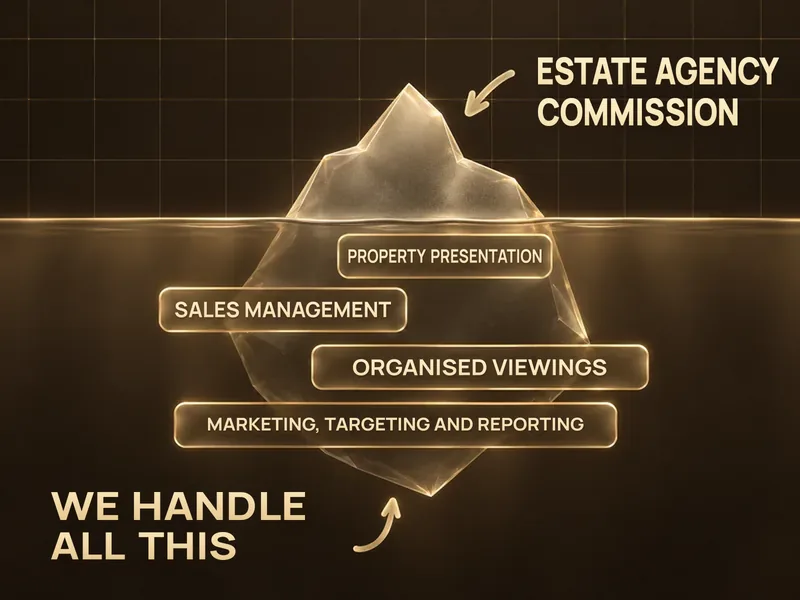
| Petr Kučera
Estate agent commission: what you pay and what you get
Estate agent commission when selling a flat: understand VAT, included services and extra costs, then compare agency quotes by their final price and scope.
Read -
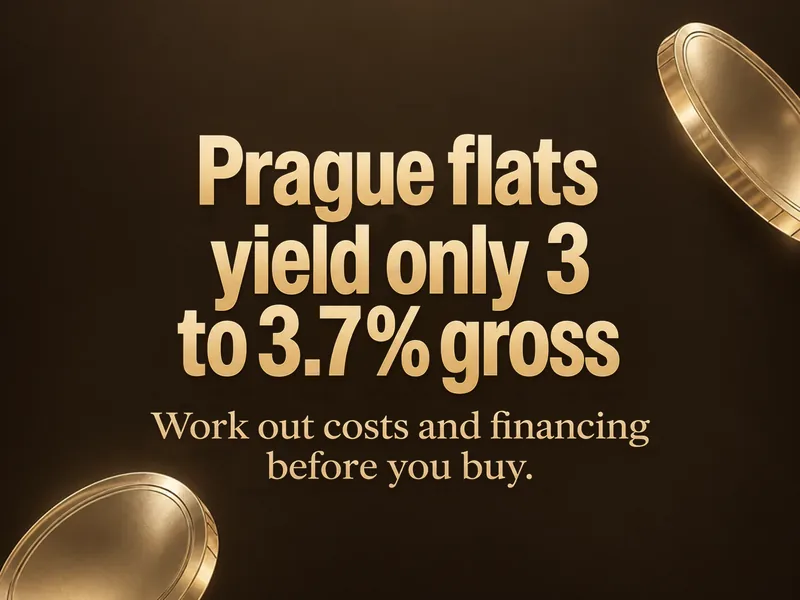
| Petr Kučera
Buy-to-let flat in Prague: yield, financing and what to check before you buy
Prague buy-to-let flats: gross yields from public data, how to work out your own net yield, CNB investment mortgage limits, tax and checks before you buy.
Read